Heat Transfer
GATE CH Guide
Syllabus breakdown, weightage, essential formulas, and a study plan for the Heat Transfer section of GATE Chemical Engineering.
Overview
Heat Transfer in the GATE Chemical Engineering (CH) syllabus covers how thermal energy moves through solids, fluids, and across phase boundaries, and how engineers size equipment around that movement. It sits under the broader "Fluid Mechanics and Mechanical Operations, Heat Transfer" theme in the official syllabus and is one of the most numerically dense sections of the paper.
The section splits into two halves that build on each other. The first half is the physics: conduction (Fourier's law), convection (dimensionless correlations like Nusselt and Prandtl numbers), radiation (Stefan-Boltzmann law), and unsteady-state conduction (lumped capacitance, Biot number). The second half is applied equipment design: heat exchangers sized with the LMTD or NTU-effectiveness method, plus boiling and condensation, which govern reboilers and condensers in distillation columns.
GATE consistently tests heat exchanger sizing (LMTD, correction factor F, area calculations) as a numerical problem, and pairs it with conceptual questions on the modes of heat transfer, dimensionless groups, and unsteady conduction. ChemeGate's LMTD Calculator covers exactly this, the log mean temperature difference and required heat transfer area, A = Q/(U × LMTD), including the worked GATE 2025 Q51 problem.
Real GATE CH PYQ Frequency (2024–2026)
| 2024 | 2025 | 2026 | 3-Yr Avg |
|---|---|---|---|
| 5 | 6 | 4 | 5 |
Computed directly from 15 real questions tagged to this topic across our GATE CH 2024–2026 archive, averaging 5 questions/year. Browse the underlying 15 questions for this topic in the PYQ archive, or see the full topic weightage comparison across all topics.
GATE Weightage
Heat Transfer typically contributes 2–4 questions (about 4–8 marks) to the GATE CH paper, most of it concentrated in heat exchanger numericals and conduction/convection theory.
| Sub-area | Approx. Marks |
|---|---|
| Heat exchangers (LMTD, NTU, F-factor) | ~3–4 |
| Conduction (steady & unsteady state) | ~2–3 |
| Convection & dimensionless correlations | ~1–2 |
| Boiling, condensation & radiation | ~1–2 |
Sub-area split is a directional estimate (our archive doesn't tag marks at this granularity), for the real, computed topic-level total, see "Real GATE CH PYQ Frequency" above.
Key Subtopics
Conduction
Fourier's law and steady 1-D conduction through plane walls, cylinders, and spheres. Includes composite-wall thermal resistance networks and the critical radius of insulation for cylindrical/spherical geometries.
Convection fundamentals
Newton's law of cooling, free vs. forced convection, and the boundary-layer concept that connects fluid mechanics to heat transfer.
Dimensionless correlations
Nusselt number correlations (Dittus-Boelter, Sieder-Tate) relate Nu to Re and Pr for forced convection in pipes; Grashof and Rayleigh numbers govern free-convection correlations.
Heat exchangers
The LMTD method for counter-current and co-current flow, the correction factor F for shell-and-tube and cross-flow exchangers, and the NTU-effectiveness method as an alternative sizing approach.
Boiling and condensation
The pool-boiling curve (nucleate, transition, film boiling) and critical heat flux; filmwise vs. dropwise condensation and Nusselt's theory for condensate film thickness.
Radiation
Stefan-Boltzmann law, black-body vs. grey-body emission, emissivity, and view factors for radiative exchange between surfaces.
Unsteady-state conduction
The lumped-capacitance method (valid when the Biot number is small) and transient conduction in solids using Heisler charts for finite Biot numbers.
Extended surfaces (fins)
Temperature distribution along a fin, fin efficiency, and fin effectiveness for enhancing convective heat transfer from a surface.
Essential Formulas
Full formula reference →Fourier's law of conduction; k = thermal conductivity, A = area normal to flow
Steady conduction through a plane wall of thickness L
Steady radial conduction through a cylindrical wall
Thermal resistances, add in series for composite walls
Newton's law of cooling for convective heat flux
Critical radius of insulation for a cylinder, adding insulation below rc increases heat loss
Biot number, ratio of internal conductive to external convective resistance
Fourier number, dimensionless time for unsteady conduction problems
Nusselt number, ratio of convective to conductive heat transfer
Dittus-Boelter correlation for turbulent flow in a pipe (n = 0.4 heating, 0.3 cooling)
Log mean temperature difference (LMTD) between hot and cold streams
Required heat transfer area, given duty Q and overall coefficient U, apply an F-factor correction for multi-pass exchangers
Effectiveness-NTU method, an alternative to LMTD when outlet temperatures are unknown
Stefan-Boltzmann law for black-body emissive power (σ = 5.67×10⁻⁸ W/m²K⁴)
Radiative heat exchange between a grey surface and its surroundings
Visual Reference
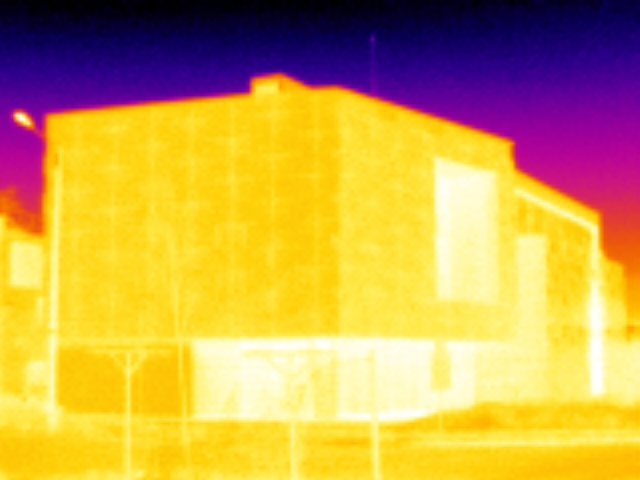
Derivations & Physical Insight
Deriving LMTD from a Differential Energy Balance
LMTD isn't an arbitrary average, it falls out of integrating the heat balance along the length of a counter-current (or co-current) exchanger. Take a differential slice dA of exchanger area. The heat lost by the hot stream equals the heat gained by the cold stream, and both equal the local duty transferred across dA via the overall coefficient U:
Define the local temperature difference ΔT = T_h − T_c. Combining the two energy-balance halves gives dΔT/ΔT as a function of dA alone (the mass-flow and cp terms collapse into constants), so integrating from the inlet end (ΔT₁) to the outlet end (ΔT₂) over the full area A produces a logarithmic, not arithmetic, relationship:
Why the Biot Number Decides Whether Lumped Capacitance Applies
The lumped-capacitance method assumes a solid's internal temperature is uniform at every instant during cooling or heating, a huge simplification, since real conduction takes time to propagate through a body. Whether that assumption is safe comes down to comparing two resistances: the internal conductive resistance (L_c/k) that governs how fast heat spreads inside the solid, and the external convective resistance (1/h) that governs how fast heat leaves the surface.
The Biot number Bi = hL_c/k is exactly that ratio. When Bi is small (conventionally < 0.1), the external convective resistance dominates, heat leaves the surface far slower than it can redistribute internally, so the whole solid cools nearly uniformly and a single lumped temperature is a good approximation. When Bi is large, internal conduction is the bottleneck, and real temperature gradients build up inside the solid that a lumped model would miss entirely, requiring Heisler charts or a full PDE solution instead.
Worked Practice Problems
Original practice problems in the GATE CH style, not copied from any question bank. Work them before reading the solution.
Biot Number Check for a Quenched Steel Ball
Problem: A steel sphere of radius 1 cm (k = 40 W/m·K) is suddenly quenched in oil with a convective coefficient h = 300 W/m²·K. Determine the Biot number and state whether the lumped-capacitance method is valid.
Given: r = 0.01 m, k = 40 W/m·K, h = 300 W/m²·K. For a sphere, L_c = r/3.
Answer: Bi ≈ 0.025 (< 0.1), lumped capacitance is valid.
Counter-Current Exchanger Area from LMTD
Problem: Hot oil enters a counter-current double-pipe exchanger at 150°C and leaves at 90°C, while cooling water enters at 25°C and leaves at 70°C. The duty is 200 kW and U = 450 W/m²·K. Find the required heat transfer area.
Given: T_h,in = 150°C, T_h,out = 90°C, T_c,in = 25°C, T_c,out = 70°C, Q = 200,000 W, U = 450 W/m²·K.
Answer: A ≈ 6.15 m²
Topic-wise PYQ Frequency
LMTD & heat exchanger sizing
Almost every GATE CH paper has a numerical here, counter-current vs. co-current comparisons and F-factor problems are favorites.
Conduction through composite/cylindrical walls
Thermal resistance networks and critical radius of insulation appear regularly as short numericals.
Unsteady-state conduction (Biot, lumped system)
Frequently tested as conceptual MCQs checking whether the lumped-capacitance assumption is valid.
Dimensionless correlations (Nu, Pr, Gr)
Usually paired with a convection numerical or asked as a matching/definition question.
Boiling & condensation
Occasional conceptual question on the boiling curve or condensation mode, rarely numerical.
Radiation
Tested less often than conduction/convection; usually a single conceptual or Stefan-Boltzmann numerical.
Fins
Occasionally appears as a short numerical on fin efficiency or effectiveness.
Recommended Study Order
- 1
1. Conduction & thermal resistance networks
The foundation for every other topic, composite walls, cylinders, and the critical radius of insulation build direct intuition for resistance-in-series thinking.
- 2
2. Convection fundamentals & dimensionless numbers
Nusselt, Prandtl, and Grashof numbers recur throughout heat exchanger and boiling/condensation problems, so lock these in early.
- 3
3. LMTD & heat exchangers
The highest-yield GATE topic in this section, practice both counter-current/co-current LMTD and F-factor multi-pass problems until they're automatic.
- 4
4. NTU-effectiveness method
A natural extension of LMTD, useful when outlet temperatures aren't given directly.
- 5
5. Unsteady-state conduction
Biot and Fourier numbers are quick to learn once resistance concepts are solid, and show up often as conceptual MCQs.
- 6
6. Boiling, condensation & radiation
Lower PYQ frequency, cover after the high-yield topics are secure, focusing on the boiling curve and Stefan-Boltzmann law.
- 7
7. Fins
Lowest frequency; a quick pass over fin efficiency/effectiveness definitions is usually enough.
Common Pitfalls
✗ Mixing up ΔT1/ΔT2 pairing between counter-current and co-current flow when computing LMTD.
✓ Always draw the temperature profile first, for counter-current, pair hot-in with cold-out; for co-current, pair hot-in with cold-in.
✗ Forgetting the F correction factor for shell-and-tube (1-2, 2-4 pass) or cross-flow exchangers.
✓ Only true counter-current or co-current exchangers use LMTD directly. Any multi-pass or cross-flow arrangement needs Q = U·A·F·LMTD with F ≤ 1.
✗ Applying the lumped-capacitance method when Bi > 0.1.
✓ Check the Biot number first, lumped capacitance assumes negligible internal resistance, which only holds for small, highly conductive, or low-h objects.
✗ Treating conduction area as constant for cylindrical or spherical geometries.
✓ Area changes with radius in radial conduction, use the logarithmic mean area (cylinder) or geometric mean area (sphere) instead of a simple arithmetic average.
Put It Into Practice
Work through LMTD and heat-exchanger-area problems interactively, then check your approach against the worked GATE 2025 Q51 solution and other solved previous-year questions.
Keep Exploring
Related
Fluid Mechanics
Full syllabus breakdown for Fluid Mechanics, subtopics, essential formulas, PYQ frequency, and recommended study order.
Open →Mechanical Operations (Unit Operations)
Particle size, screening, size reduction, sedimentation, filtration, and fluidization, the core unit operations section for GATE CH.
Open →LMTD Calculator
Log Mean Temperature Difference for counter/co-current flow. Compute heat transfer area A = Q/(U·LMTD).
Open →GATE CH Formula Sheet
Every core GATE Chemical Engineering formula in one place, grouped by topic with variable definitions.
Open →GATE Practice Tests by Year
Full-length, timed GATE CH practice tests (2024–2026) with instant, step-by-step-explained results.
Open →